In this article, we will talk about the latest Windows 11 Update for the 25H2 Main Release, which is the Build 26200.8328 or KB5083631.
For those of you who are not familiar with how Windows 11 Updates for the Main Release work, I will explain it to you in the following lines.
Every month Windows 11 has a B and a C Release for Windows 11. Usually, the B Release is launched on the second Tuesday of the month and contains all the features that were tested in the previous month’s C Release.
Features that are gradually rolling out
- [Gaming] Xbox mode is available on Windows 11 PCs, including laptops, desktops, and tablets. Inspired by the Xbox console experience, Xbox mode offers a streamlined, full‑screen interface that puts your games front and center while minimizing background distractions. Xbox mode is designed for those moments when you want to lean back, pick up a controller, and focus on the game. Enter Xbox mode from the Xbox app, Game Bar settings, or by pressing Windows logo key + F11. For more information, see Xbox Mode Begins Rolling Out to Players on Windows 11PCs Today.
- [File Explorer]
- This update expands the list of archive formats that can be used in File Explorer to include uu, cpio, xar, and NuGet Packages (nupkg).
- With this update, View and Sort preferences are preserved in folders such as Downloads and Documents when apps launch File Explorer directly to those locations.
- This update removes a white flash that could appear when opening This PC or while resizing the Details pane in dark mode.
- This update improves the reliability of relevant explorer.exe processes so they stop after closing File Explorer windows.
- [Input]
- You can feel haptic feedback effects on compatible input devices when performing certain actions, such as aligning objects in PowerPoint, snapping or resizing windows. These haptic signals can be turned on or off in Settings > Bluetooth & devices > Mouse, Touchpad, or Pen > Haptic signals. This experience is supported on Surface Slim Pen 2, ASUS Pen 3.0, and MSI Pen 2 with haptic feedback. Support for additional compatible devices, including select mice such as Logitech MX Master 4, might become available as hardware partners release updates.
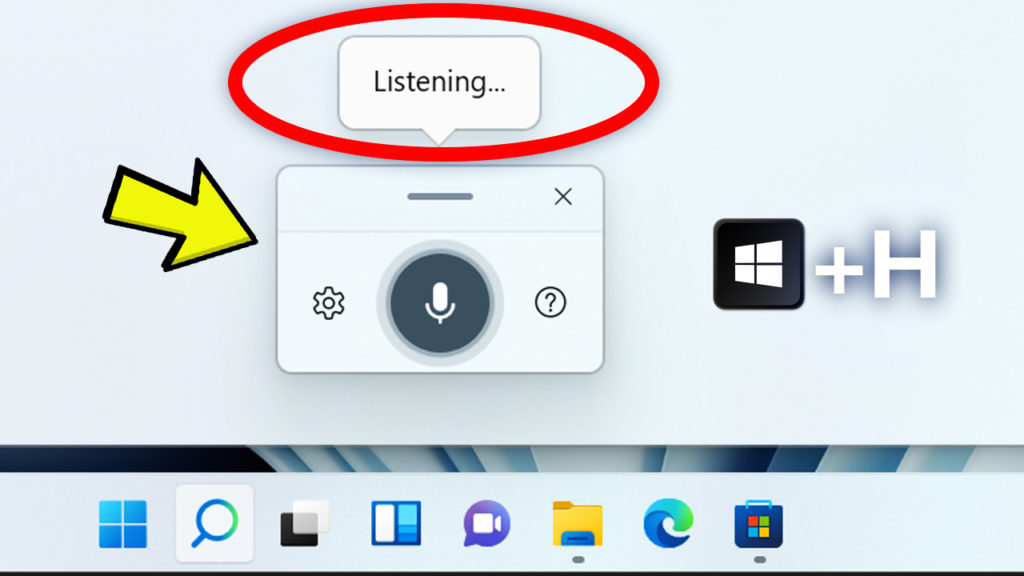
- Voice typing on the touch keyboard now looks simpler and more intuitive. The updated design removes the full‑screen overlay and shows voice typing animations directly on the dictation key, helping you stay focused without extra visual distractions.
- The Arabic 101 Legacy keyboard layout is now available. You can add it when selecting a keyboard for Arabic under Time & Language > Language & Region. This option is for those who prefer the keyboard design used before recent changes with AltGr.
- This update improves the reliability of setting custom tools under Settings > Bluetooth & Devices > Wheel.
- This update improves the persistence of Fluid Dictation setting in voice typing.
- This update improves the reliability of keyboard navigation for emoji panels (Windows logo key + Period).
- This update improves the reliability of typing when using the ADLaM keyboard.
- [Sharing] Drag Tray is now called Drop Tray. Its settings are now under Settings > System > Multitasking (previously Nearby sharing). Drop Tray uses a smaller peek view. This improvement helps prevent the Drop Tray from opening unintentionally and makes it easier to dismiss when you work near the top of the screen.
- [Introducing Agents on Taskbar] Windows is adding a new way to monitor your agents from the taskbar. This experience supports agents across first- and third-party apps, with Researcher in the Microsoft 365 Copilot app as the first adopter. When Researcher works on a report, Windows shows progress on the taskbar so you can check updates at a glance. Hover over the Microsoft 365 Copilot icon to see real-time progress. When the report is ready, Windows notifies you. Select the notification or the icon to return to the app and review and use the results.
Developers can learn how to use this API with the Windows.UI.Shell.Tasks API.
- [Enterprise State Roaming (ESR)] ESR can now be managed through Windows Backup for Organizations policies. This makes setup easier for IT administrators. To learn more, see Enterprise State Roaming.
- [Policy-Based Removal of Preinstalled Microsoft Apps] This update adds support for a dynamic app removal list to the “Remove Default Microsoft Store packages” policy for Windows Enterprise and Education. Administrators can remove additional MSIX/APPX-packaged apps by specifying their app package family names using Group Policy. The dynamic list is not currently available in Intune Settings Catalog. Validation must be performed using Group Policy or custom OMA-URI. For more information, see Policy-based in-box app removal.
- [Printing] This update adds a new icon to show where a printer supports Windows Protected Print Mode in print settings.
- [Windows Driver Policy update] This update improves Windows security by changing how the Windows kernel trusts third‑party drivers. Default trust for cross‑signed drivers is removed, while drivers from the Windows Hardware Compatibility Program (WHCP) and an allow list of trusted legacy drivers remain allowed. Windows audits driver compatibility for at least 100 hours and three reboots before enabling enforcement. After enforcement, a small number of cross‑signed drivers might be blocked. For more information, see the Windows driver policy and the Advancing Windows driver security blog.
- [Enhanced security and performance for batch files] Administrators and Application Control for Business policy authors now have additional control over how the system processes batch files and Command Prompt (CMD) scripts. Starting with this release, administrators can enable a more secure processing mode for batch files. This mode prevents batch files from changing during execution.
To enable this setting, add the following value to the registry:
Registry Key: HKEY_LOCAL_MACHINE\Software\Microsoft\Command Processor
Value name: LockBatchFilesWhenInUse
Type: DWORD
Data to be set: 0 (disabled) or 1 (enabled)
Policy authors can also enable this mode by using the LockBatchFilesWhenInUse application manifest control, as documented in the Application Control for Business manifest schema. - [Microsoft Store] This update reduces unexpected errors when downloading and installing apps from the Microsoft Store, including errors 0x80070057, 0x80240008, and 0x80073d28.
- [Fonts] This update includes improvements to the Leelawadee UI font family for the Thai, Lao, Khmer, and Lontara scripts to enhance glyph sequencing, positioning, and rendering.
- [Audio] This update improves third-party driver compatibility with midisrv.exe.
- [Taskbar] This update improves the reliability of loading the system tray area of the taskbar.
- [Windows Hello] This update improves:
- Reliability of Windows Hello Face.
- Persistence of Windows Hello Fingerprint across upgrades.
- [Storage] This update improves:
- Performance when viewing storage information for large volumes in Settings > System > Storage > Advanced Storage Settings > Disks & Volumes.
- The size limit for formatting FAT32 volumes from the command line from 32GB to 2TB.
- [Delivery Optimization] This update improves memory usage, reducing likelihood it will use an unexpectedly large amount of memory.
- [Display and graphics] This update improves persistence and availability of color profile options for supported monitors.
- [Kiosk mode] This update simplifies configuration for allowed packaged apps in kiosks when Microsoft Edge is one of the allowed apps.
- [General Performance] This update improves the performance of launching startup apps after starting your device (apps listed under Settings > Apps > Startup).
- [General Reliability] This update brings underlying changes to help improve explorer.exe reliability, including at sign‑in, when interacting with taskbar menus and Task View, when unpinning items from File Explorer’s Quick Access, and more.
Features that are rolling out for everyone
- [Secure Boot] With this update, Windows quality updates include additional high confidence device targeting data, increasing coverage of devices eligible to automatically receive new Secure Boot certificates. Devices receive the new certificates only after demonstrating sufficient successful update signals, maintaining a controlled and phased rollout. For more information, see Windows Secure Boot certificate expiration and CA updates.
- [Authentication (Kerberos)] This update improves Kerberos authentication in Remote Desktop sessions using Remote Credential Guard addressing error 0xc000009a.
- [Remote Desktop (known issue)] Fixed: This update addresses an issue that affects the Remote Desktop Connection security warning dialog. The dialog could render incorrectly in multi-monitor scenario when the monitors had different scaling set. This might occur after installing the April 2026 (KB5083769) security update. For more information, see Understanding security warnings when opening Remote Desktop (RDP) files.
- [Windows Security] This update improves event logging related to CVE‑2024‑30098 by including the name of the affected application. This change makes it easier to identify applications that rely on smart card certificates and may need updates following recent security changes.
For more information about this Update, you can check this article from the Microsoft Blog.
For a more in-depth presentation of the New Build, you can watch the video below from the YouTube channel.
 11
11
 20
20