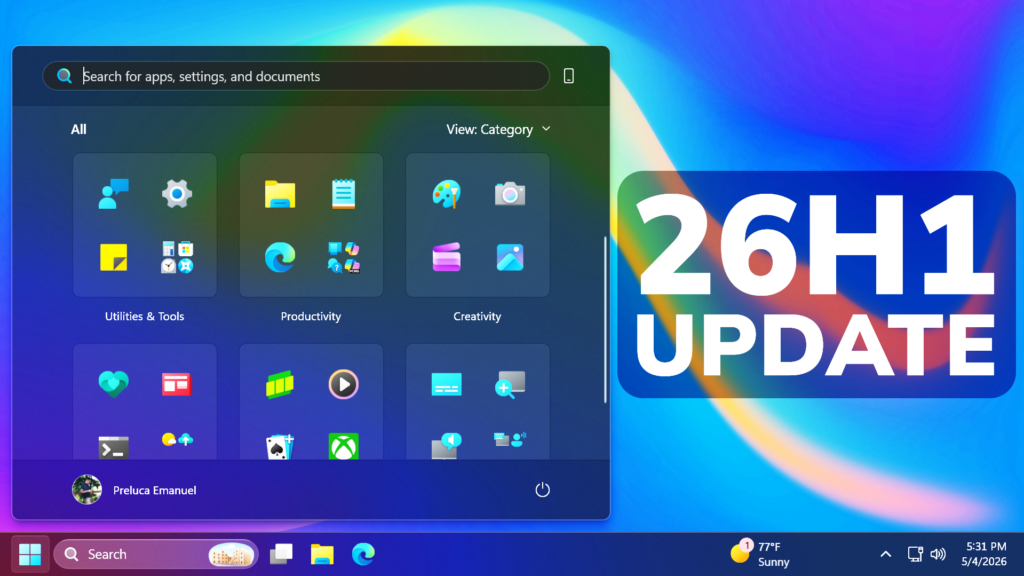
In this article, we will talk about the New Windows 11 26H1 March 2026 Update, Build 28000.1896 or KB5083806.
Microsoft has Released Windows 11 26H1, which is a New Version that Microsoft is using to test the New Platform for the upcoming Qualcomm Snapdragon X2 Devices and Nvidia N1X Processors.
Windows 11, version 26H1 will only be available on new devices that will be released to the market in early 2026 and it is not offered as an in-place update from Windows 11, version 24H2 or 25H2 on existing devices.
Devices running Windows 11, version 26H1 will continue receiving monthly updates for security, quality, and new features, the same as devices running Windows 11, versions 24H2 and 25H2.
Devices running Windows 11, version 26H1 will not be able to update to the next annual feature update in the second half of 2026. This is because Windows 11, version 26H1 is based on a different Windows core than Windows 11, versions 24H2 and 25H2, and the upcoming feature update. These devices will have a path to update in a future Windows release.
For more information about Windows 11 26H1, you can check this article from the Microsoft Website.
New Features in this Update
- [Narrator] Narrator provides rich image descriptions on Copilot+ PCs and now works with Copilot on all Windows 11 devices. Press Narrator key + Ctrl + D to describe the focused image or Narrator key + Ctrl + S to describe the full screen. Copilot opens with the image ready, allowing you to enter a prompt for a customized description. The image is shared only after you choose to describe it. On Copilot+ PCs, Narrator gives instant, on‑device descriptions, and you can select Ask Copilot for more detail.
- [Smart App Control] You can turn Smart App Control (SAC) on or off without needing a clean install. To make changes, go to Settings > Windows Security > App & Browser Control > Smart App Control settings. When turned on, SAC helps block untrusted or potentially harmful apps. To learn more, see App & Browser Control in the Windows Security App. This feature was previously disclosed in January 2026 (KB5074105) and is now beginning to roll out.
- [Account Settings]
- Microsoft 365 Family subscribers can upgrade to a different Microsoft 365 plan from Settings > Accounts. To remove the upgrade option, turn off Suggested content in Settings.
- This update improves the design of the dialog boxes in Settings > Accounts > Other users to match the modern Windows look and support dark mode. The visibility of the dialog box option depends on whether the device has a domain joined work or school account.
- [Input] The Pen settings page includes refinements to the pen tail button options. The new “Same as Copilot key” option enables the pen tail button to open the same app as the Copilot key.
- [Settings]
- The Settings About page (Settings > About) has been improved to provide a more structured and intuitive experience, offering clearer device specifications and easier navigation to related device components, including quick access to Storage settings.
- The device information card on the Settings Home page simplifies key device specifications and improves consistency across the end-to-end flow from the Home Card to the Settings > System > About page, making information easier to scan and understand.
- This update improves the reliability and performance of opening the Home in Settings.
- This update improves the reliability of downloading required updates when you’re prompted in Settings > System > Advanced.
- [File Explorer] This update improves the File Explorer experience.
- You can more reliability unblock files downloaded from the internet in order to preview them in File Explorer.
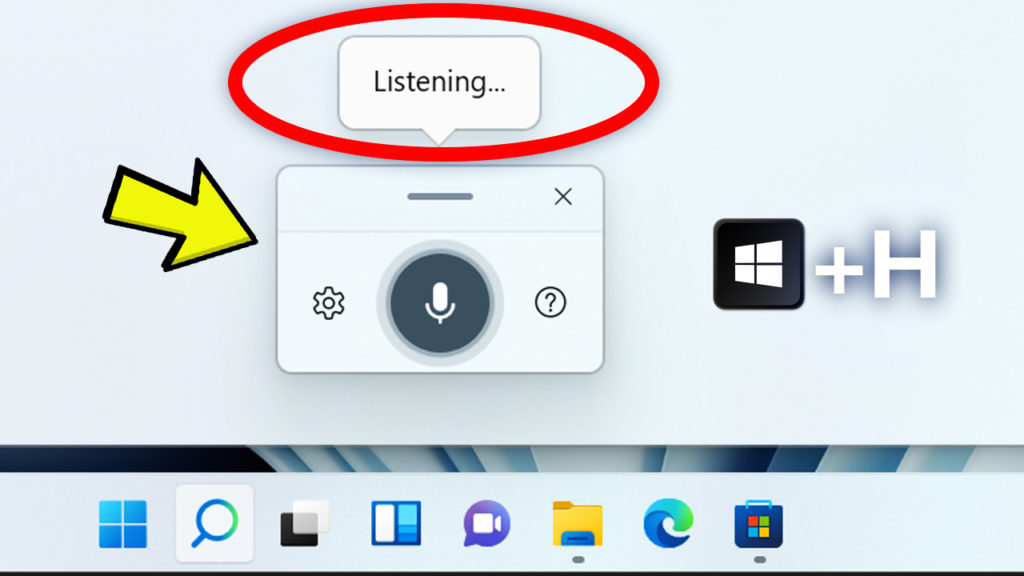
- You can use Voice Typing (Windows logo key + H) when renaming a file in File Explorer.
- You can now sort the permissions entries in the Advanced Security Settings window for a folder in File Explorer by Principal.
- [Display] This update includes Display reliability improvements.
- Monitors can now report refresh rates higher than 1000 Hz.
- When you use a native USB4 monitor connection, the USB controller can now enter its lowest power level while the PC is sleeping, which helps save battery life.
- Auto rotation reliability has improved after resuming from sleep.
- HDR reliability has improved for displays with non-compliant DisplayID 2.0 blocks.
- Monitors with DisplayID now report a more accurate size when the WMI monitor APIs are used.
- [Printing] Updated downlevel baseline support for printer connections to be Windows 10, version 1607 and Windows Server 2016 (Build 14393).
- [Safe mode] This update improves the reliability of loading taskbar components in safe mode.
- [Voice Access] This update improves how numbers are detected and written when using Voice Access in English.
- [Start menu] This update improves the reliability of applying the Start menu layout through Group Policy when desktopAppLink is present in the JSON.
- [Remote Desktop] The Set-RDSessionCollectionConfiguration PowerShell command now recognizes DisableSeamlessLanguageBar.
- [Audio] This update improves how short MIDI messages are handled in cases where an application is initialized without providing long message buffers.
- [System File Checker] This update removes an extraneous error message you might unexpectedly see when running sfc /scannow.
- [Windows Hello] This update improves Windows Hello Fingerprint reliability for certain devices.
- [Active Directory] This update addresses a scenario where using ntdsutil.exe with 8KB database pages upgrades the NTDS.dit database, making it unmountable.
- [Remote Desktop (known issue)] This update addresses an issue that affects the Remote Desktop Connection security warning dialog. The dialog could render incorrectly in multi-monitor scenario when the monitors had different scaling set. This might occur after installing the April 2026 security update (KB5083768). For more information, see Understanding security warnings when opening Remote Desktop (RDP) files.
Windows 11 Servicing Stack Update – 28000.1837
This update makes quality improvements to the servicing stack, which is the component that installs Windows updates. Servicing stack updates (SSU) ensure that you have a robust and reliable servicing stack so that your devices can receive and install Microsoft updates.
For more info about this Update, you can check this article from the Microsoft Blog.
For a more in-depth presentation of the New Update, you can watch the video below from the YouTube channel.
 11
11
 20
20